

Worlds in Motion
at thús
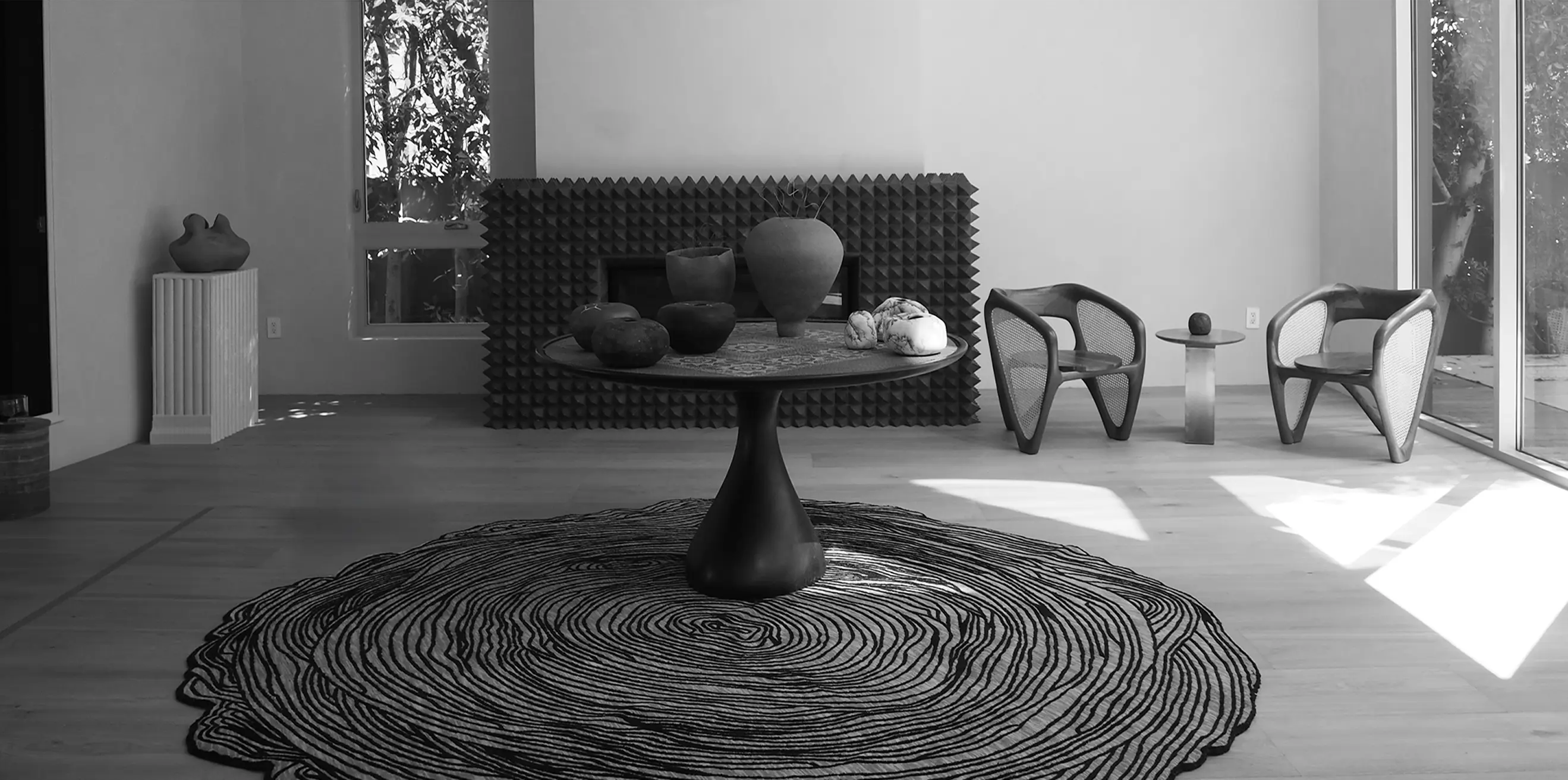
Thús Huma is a living composition shaped by many hands. Across the house, distinct practices meet. Furniture, light, textile, object, and art coexist in quiet dialogue, each carrying its own lineage of craft and intent.
The works presented here come from artists, artisans, and studios working across geographies and disciplines. Some pieces are born from long-standing collaborations, others from chance encounters that felt inevitable. Together, they form a layered landscape of material, memory, and contemporary expression.
As one moves through the house, these worlds unfold slowly. Nothing is isolated.
Thús Huma holds space for these conversations, inviting visitors to experience design as something lived, shared, and quietly in motion.


Crafting Ancestral Seeds
hosting
mercedes salazar
craft
hand woven
materiality
raffia gold
Born in Bogotá , Mercedes Salazar is a multidisciplinary artist and designer who blends traditional Colombian craftsmanship with contemporary design. After graduating as a Jewelry and Goldsmith Artisan from the Crafts School of the INBA, she returned to Colombia to establish her eponymous design house.
Over the past 25 years, Salazar has fostered deep, collaborative relationships with over 200 artisans from the Wayuu, Camsá, Usiacurí, and Sandoná communities, creating works that honor ancestral wisdom and explore the liminal space between matter and spirit.
Crafting the Intangible
At Thús Huma, a sanctuary for those seeking to build storied, living spaces, we invite you into an artful dialogue with the worldly artistry of Mercedes Salazar.
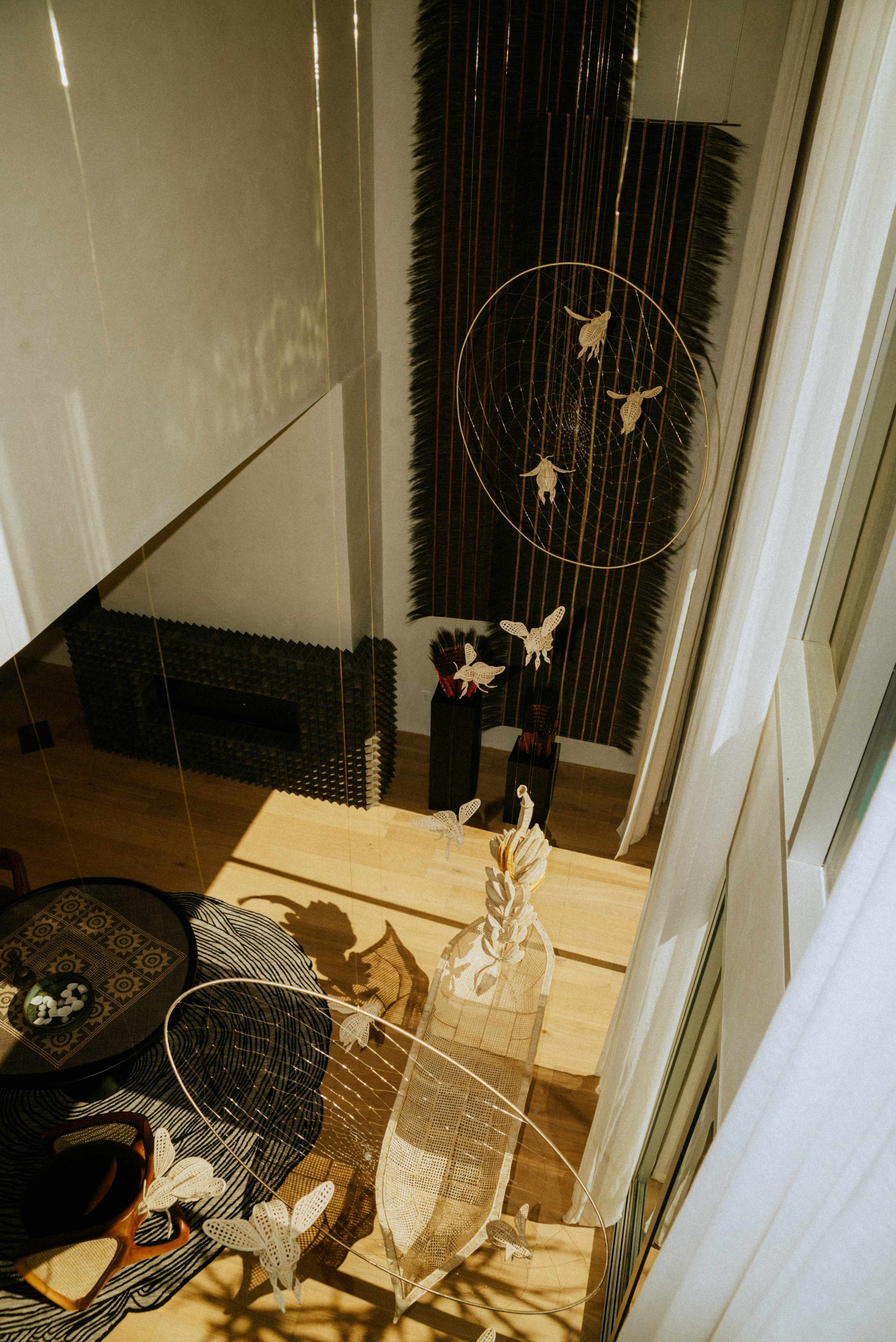
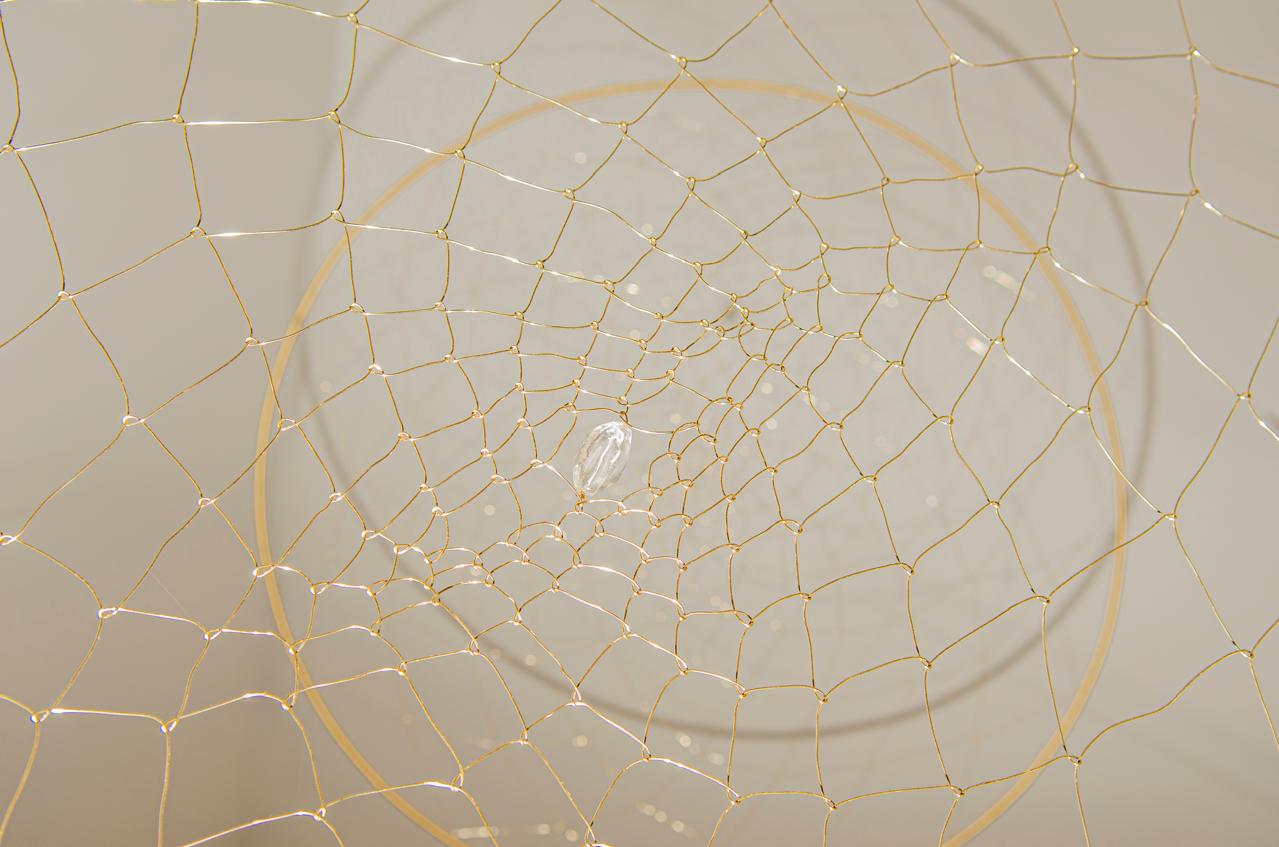
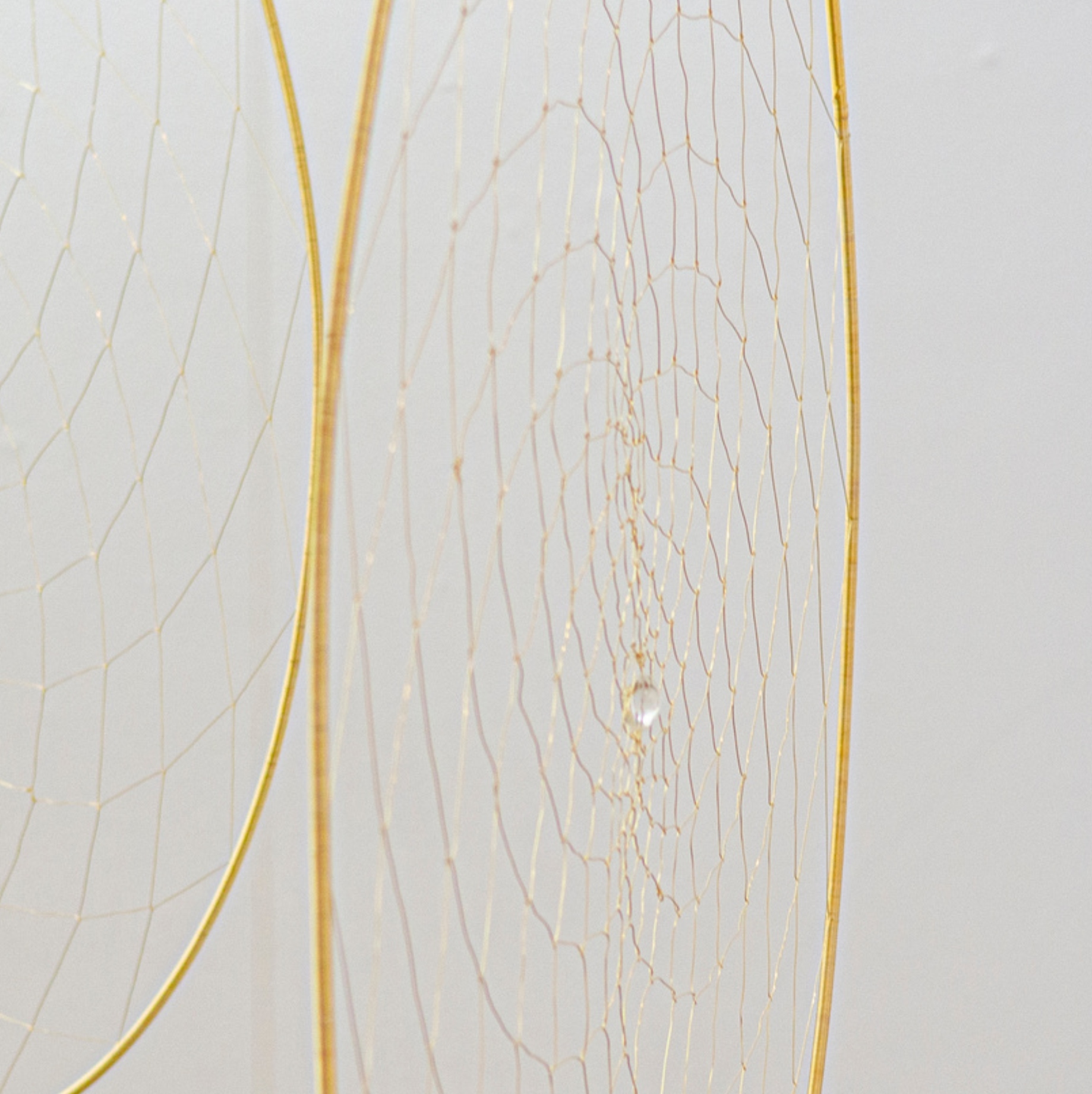
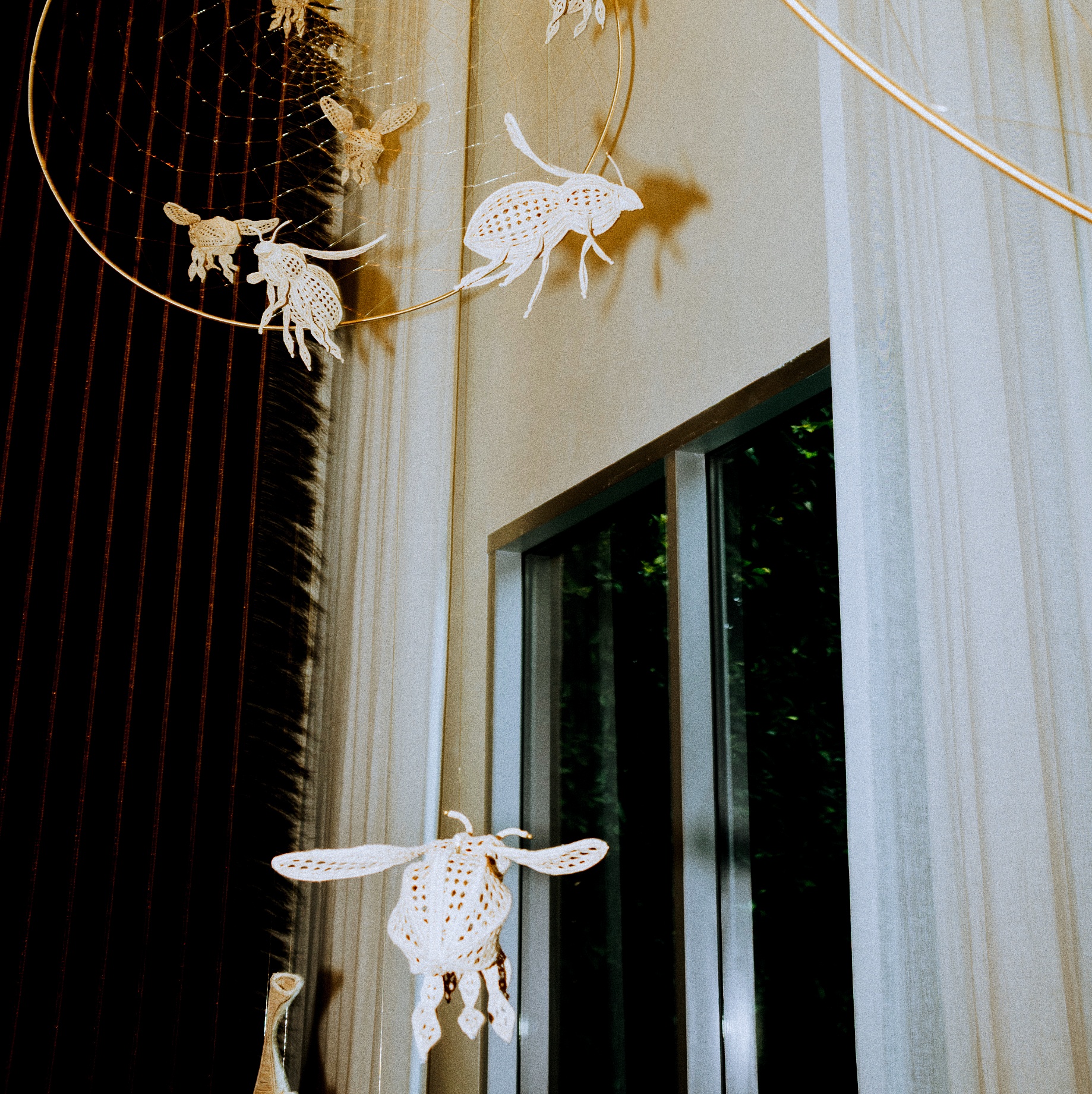
Atrapasueños: Harmonizing function with poetic design, the Atrapasueños serve as symbolic guardians for those crossing between waking and dreaming states. Crafted like delicate webs spun from threads of light, they capture and release energy, transforming fleeting thoughts into intentional action and infusing any room with a deeply protective aura
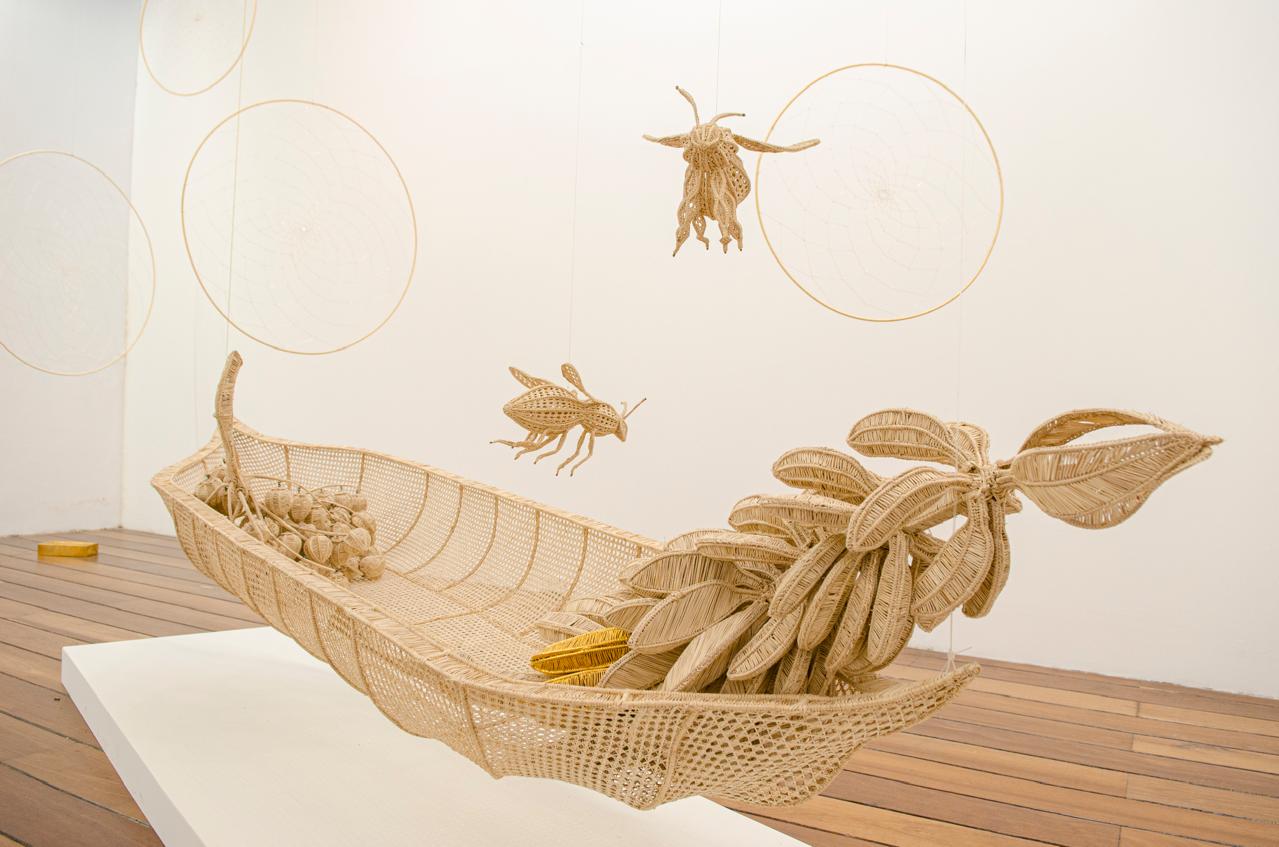
La Cosecha Embodying a worldly narrative, La Cosecha draws inspiration from the harvest boats of Colombia’s Chocó region. Beyond their historic roots, they represent a beautifully crafted journey across waters—an artful dialogue that echoes our own introspective voyages through the depths of the soul.
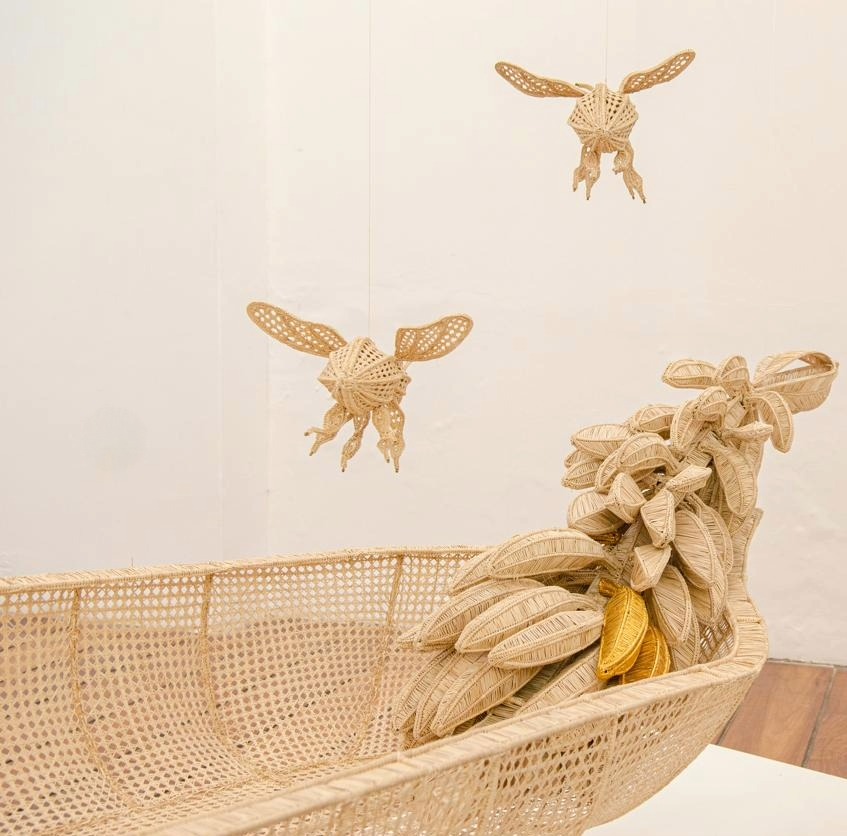
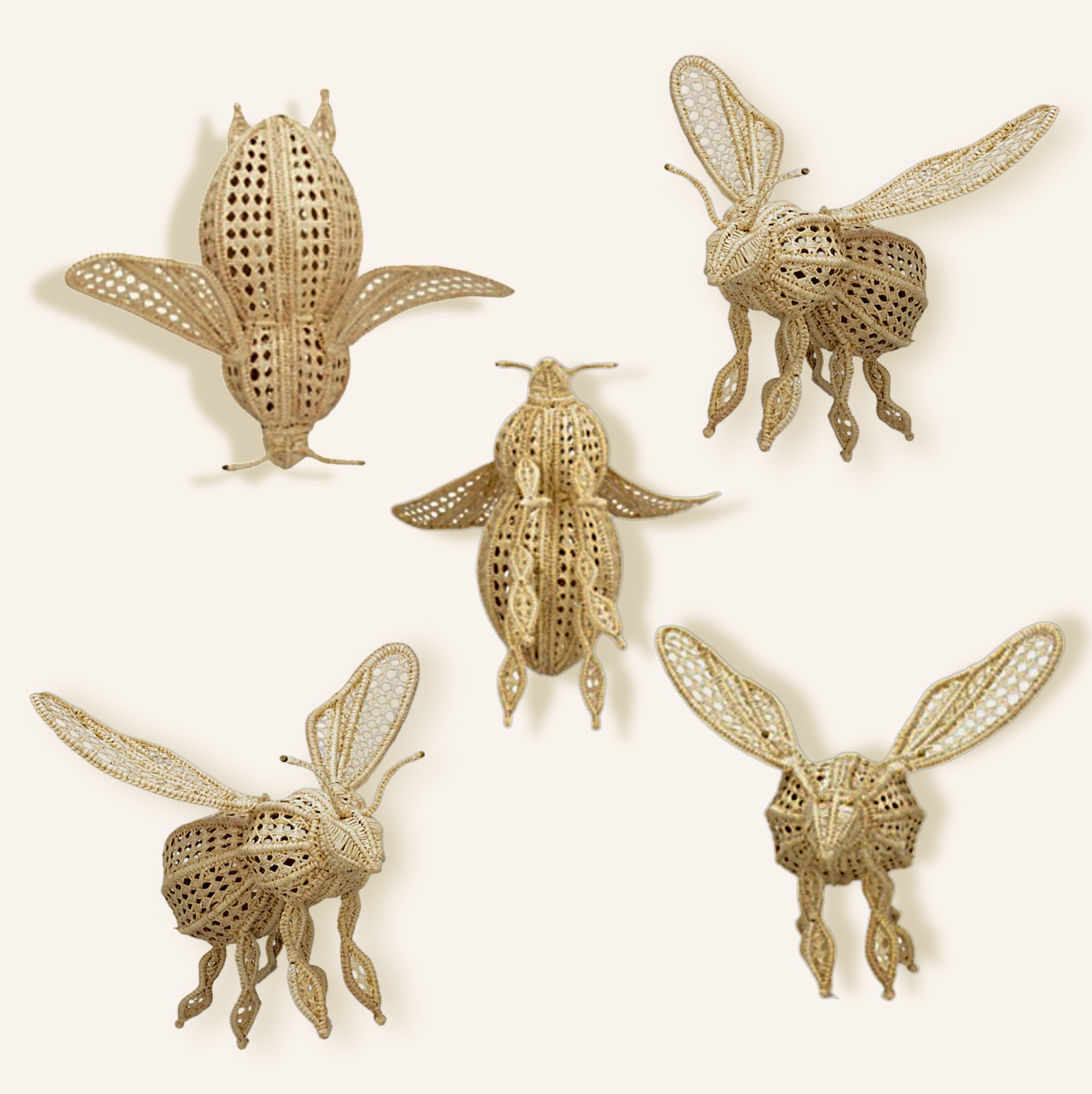
Abejas A tactile exploration of bespoke artistry, the Abejas celebrate the nuanced perspectives of artisans in Usiacurí, who hand-weave each piece from iraca palm. Revered as daughters of the Sun and guardians of the hive, these bees embody the perfect geometry of the honeycomb, allowing light to breathe through their form. They are consequential keepers of life’s cycles, gracefully shifting between material presence and spiritual resonance to create a truly layered storytelling experience.
Mercedes Salazar’s collection embodies Thús Huma’s dedication to curating homes that inspire discovery and evoke meaning. We invite you to encounter these storied works within our sanctuary—a shape-shifting haven for art, culture, and life. Here, at the intersection of character, culture, and contemporary living, these worldly pieces transcend mere decor, offering a tactile exploration of bespoke artistry that transforms the home into a tapestry of design. Welcome to the art of adorned living.



Woven
Memory
hosting
nadine weatherstone
in collaboration with
huma sulaiman
craft
jamdani
materiality
wallpaper
Nadine Weatherstone is an internationally recognized decorative artist and designer celebrated for her innovative approach to surface and texture.
Based in Cornelius Oregon, she brings over three decades of expertise to her eponymous studio, Nadine Weatherstone Atelier, renowned for its luxury handcrafted wallpapers and bespoke wall finishes.
A Loom Remembered
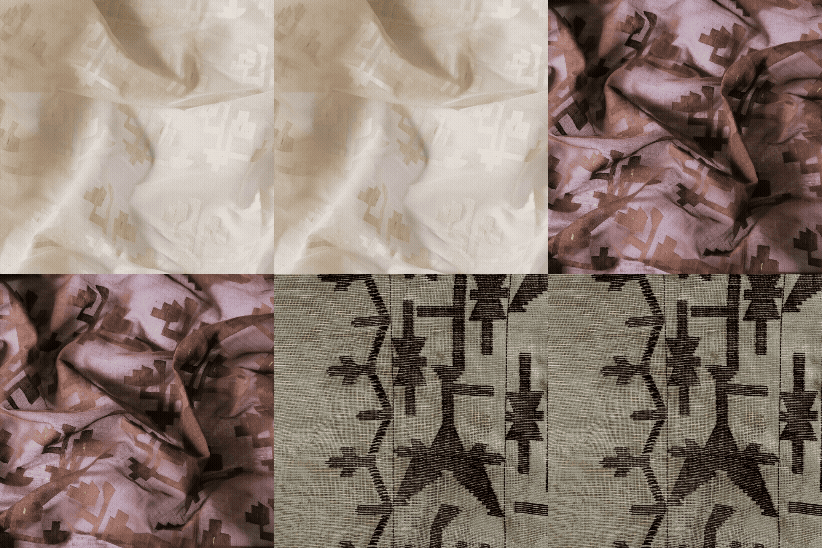
Created in collaboration between Thús Huma and Nadine Weatherstone, this wallcovering draws from the centuries-old tradition of Jamdani weaving, reinterpreted through a contemporary, tactile lens.
Rooted in the heritage of Bangladesh, the original woven motifs are not replicated but translated. Jamdani’s rhythm, density, and quiet intricacy are preserved as memory, then reformed through Nadine’s hand-applied gesso and surface techniques, guided by Huma’s curatorial eye.
While still warm, gesso is worked into the fabric, settling into its weave and texture before being cured and layered with pigment and subtle gilt. What emerges is a surface that carries time within it—textile and plaster, softness and structure, light and shadow held together.
Each wallcovering is developed as a shared exploration of craft and context, and can be customised in tone and finish. The result is not ornament, but atmosphere—surfaces that feel lived with, resonant, and deeply present within the architecture of the home
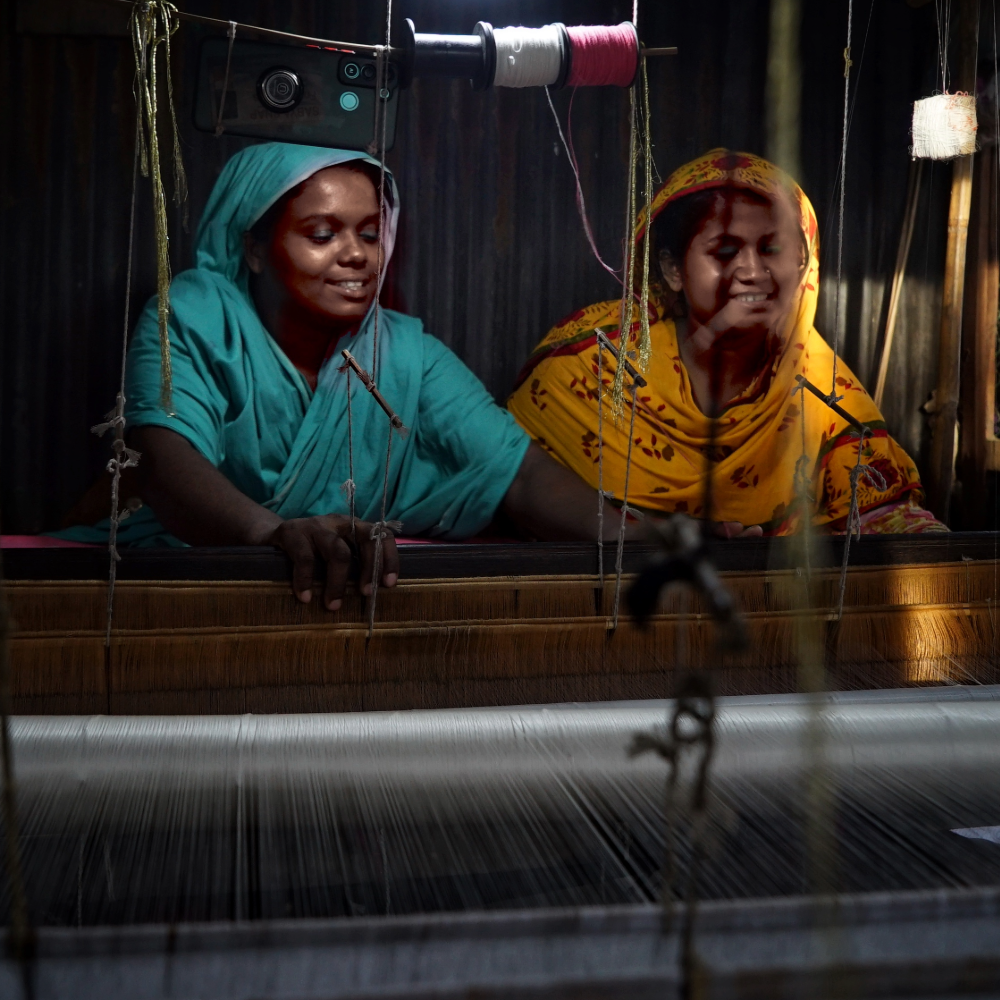
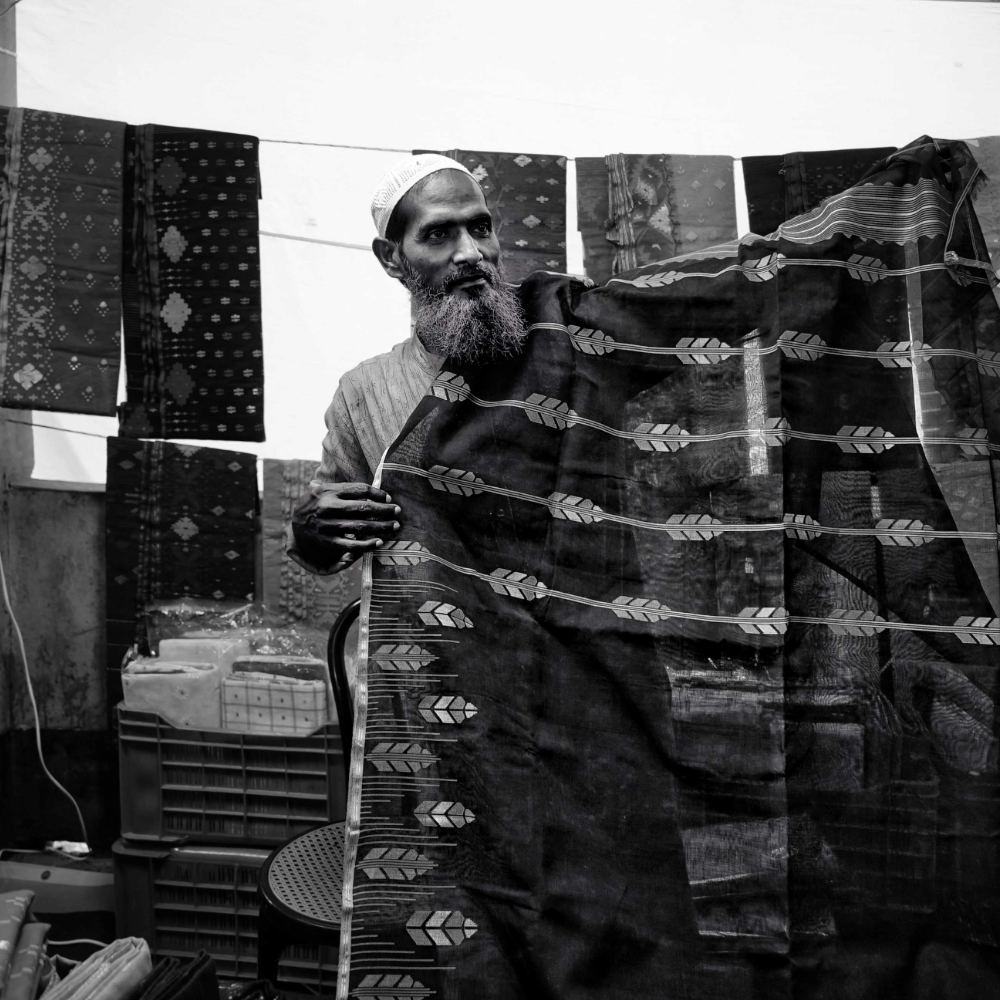
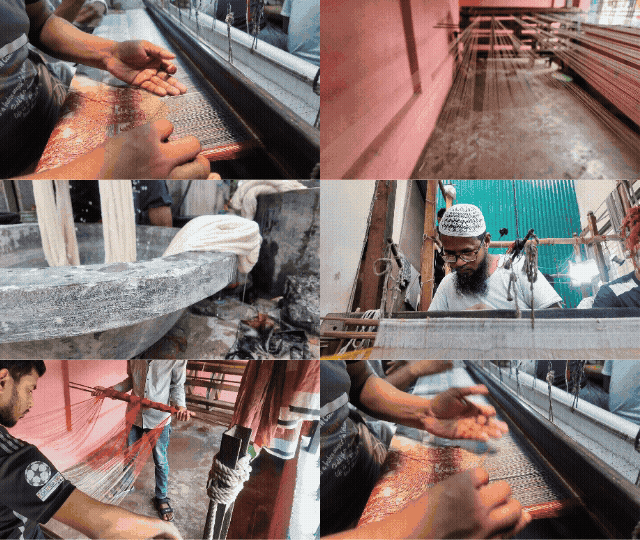
Jamdani is a vividly patterned, sheer cotton fabric, traditionally woven on a handloom by craftspeople and apprentices around Dhaka. Jamdani textiles combine intricacy of design with muted or vibrant colours, and the finished garments are highly breathable. It is a time-consuming and labour-intensive form of weaving because of the richness of its motifs, which are created directly on the loom using the discontinuous weft technique.


The Fabric That Conquered the World
hosting
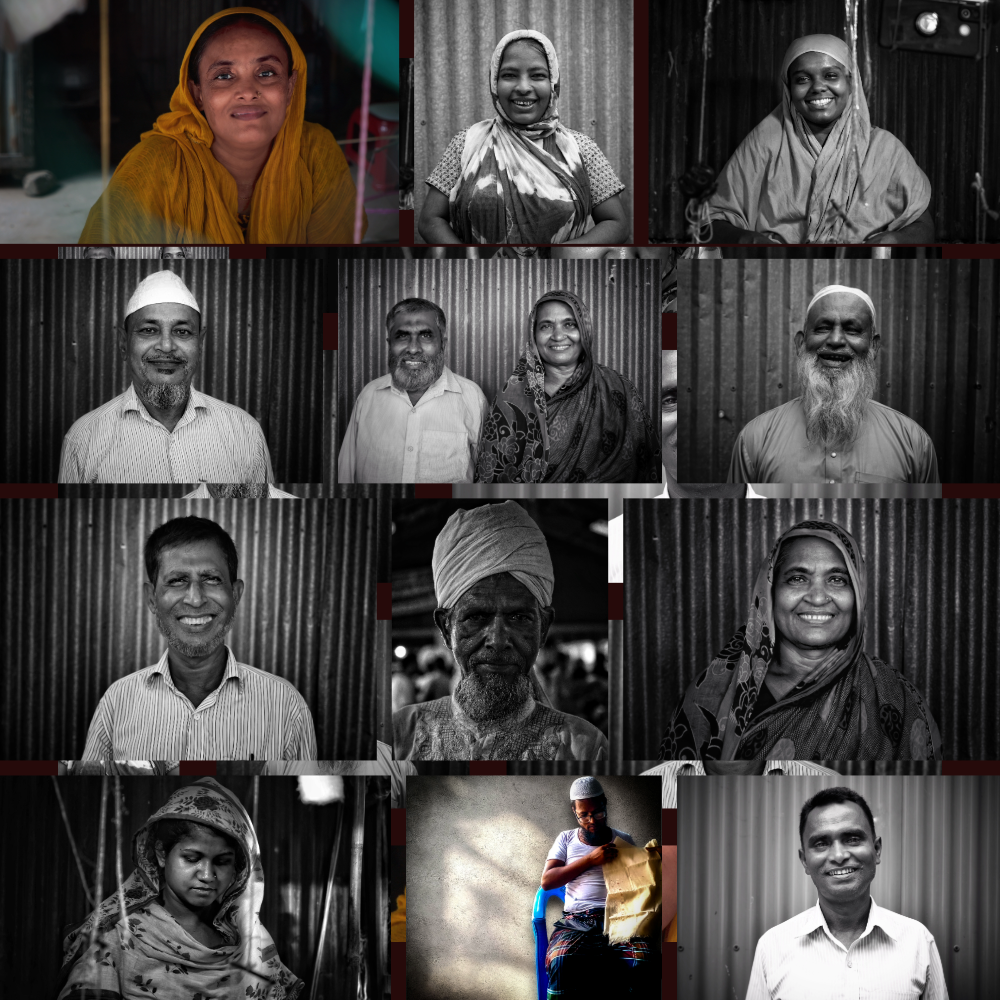
Weavers of Bangladesh
in collaboration with
huma sulaiman
craft
jamdani
materiality
Fabric
Jamdani is not merely a fabric; it is a powerful symbol of identity, artistry, and cultural heritage that plays a vital role in the stories of place-making in Bangladesh. While the origins of this delicate muslin trace back to the ancient region of Bengal, documented as early as 300 BCE, it was under the opulent patronage of the Mughal Empire in the 16th century that Jamdani truly flourished into a globally coveted luxury. The distinctive Persian influence introduced delicate geometric and floral representations (such as the golab buti or rose, and chameli buti or jasmine), leading to the name “Jamdani,” which translates to a vase of flowers.
Despite suffering near extinction during British colonial rule due to the influx of industrially manufactured textiles, the craft was fiercely protected by generations of dedicated artisan families. Today, this unparalleled form of handloom weaving is recognized by UNESCO as an Intangible Cultural Heritage of Humanity and holds a Geographical Indication (GI) status, protecting its unique geographical origins and the communities that sustain it.
Inscribed in 2013 (8.COM) on the Representative List of the Intangible Cultural Heritage of Humanity
The art of jamdani weaving
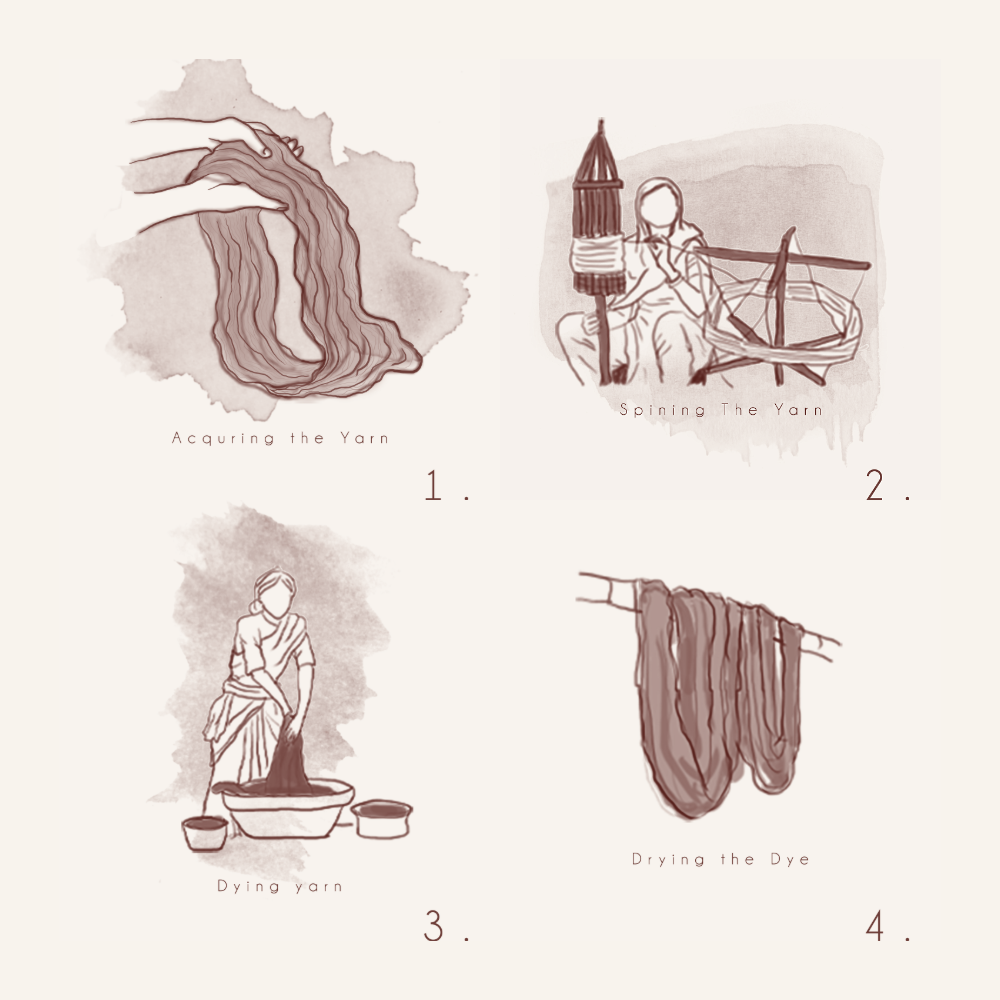
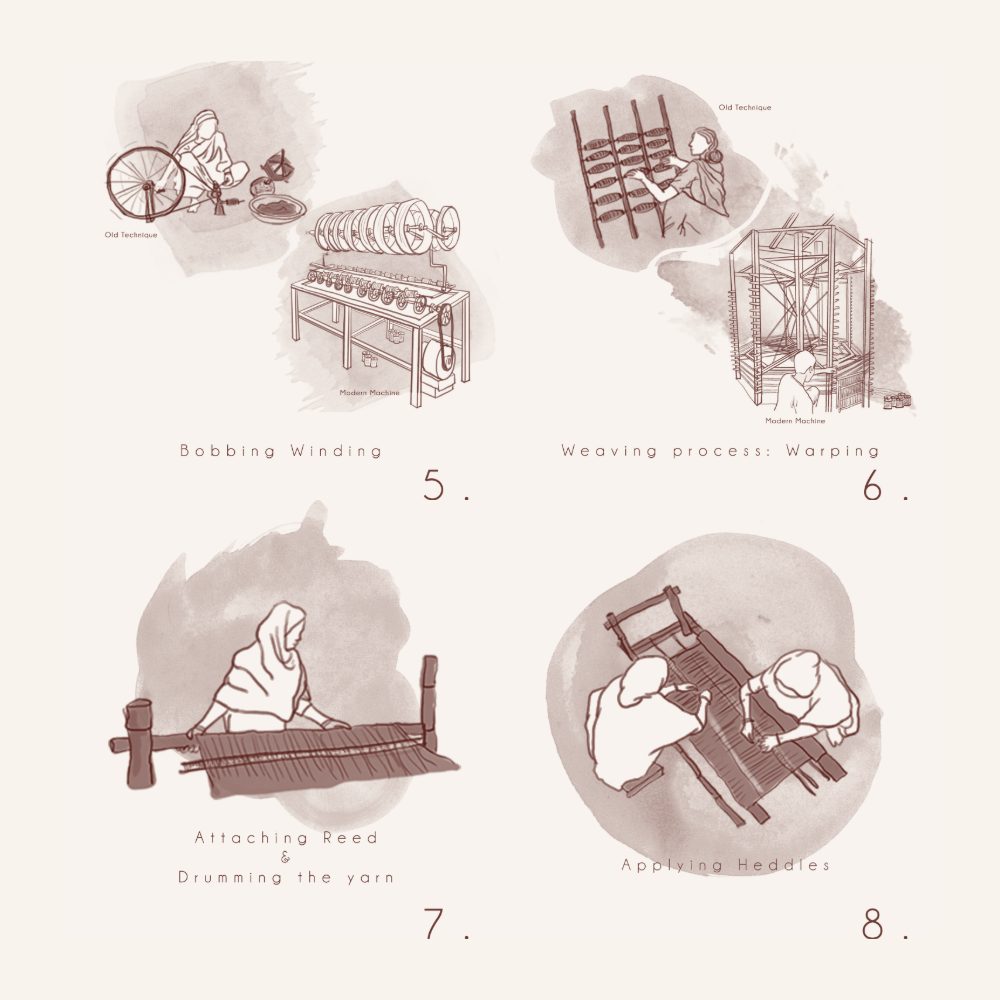
The creation of Jamdani is an exceptionally labor-intensive process that marries extreme mathematical precision with organic, human-led creativity. It is entirely hand-loomed and represents one of the most sustainable, pollution-free applications of textile design.
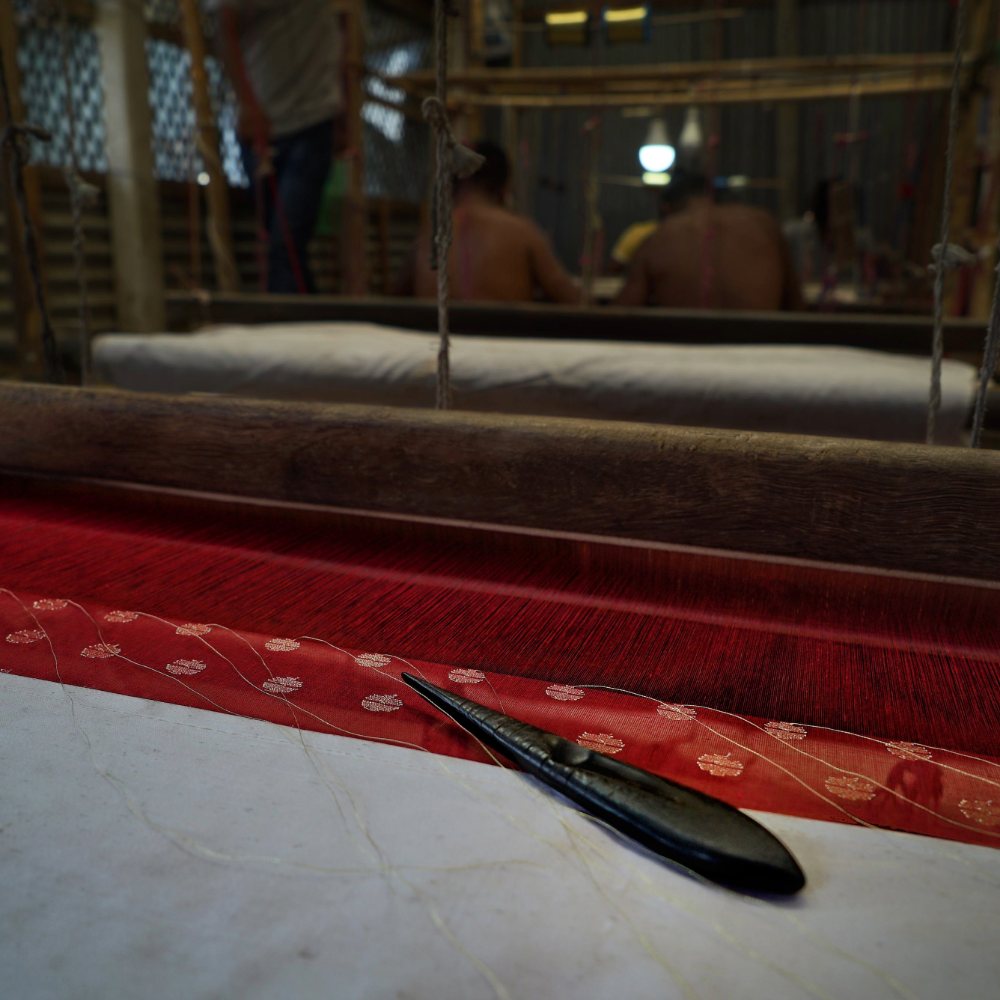
The Technique: Jamdani is crafted using a highly complex “discontinuous weft” technique. While standard warp and weft threads create the sheer, fine base of the fabric, a supplementary weft of thicker, often differently colored threads is meticulously added by hand to form the intricate patterns directly on the loom.
The Tools: Artisans intricately interlace these additional threads into the warp using fine bamboo sticks. The wooden and bamboo handlooms themselves are entirely manually operated.
The Vision: The patterns are never printed, embroidered, or sketched directly onto the finished fabric. Instead, they are drawn on graph paper placed underneath the warp to guide the weavers. In many instances, master weavers create traditional, complex motifs entirely “by heart,” relying on generational memory and architectural intuition.
The Time: Because every motif is inlaid by hand, pick by pick, the weaving of a richly designed Jamdani piece can take anywhere from several weeks to over six months to complete, making each textile a truly one-of-a-kind masterpiece. within the architecture of the home
All Photography & Research by Dilruba F. Shuvra, Architect, Educator, and Photographer. Assistant Professor-Adjunct, School of Architecture and Urban Planning, UW-Milwaukee. Illustrations detailing the weaving process by artist Resham Shehab Tirtho (IG: @tirthosthan), based on oral histories.